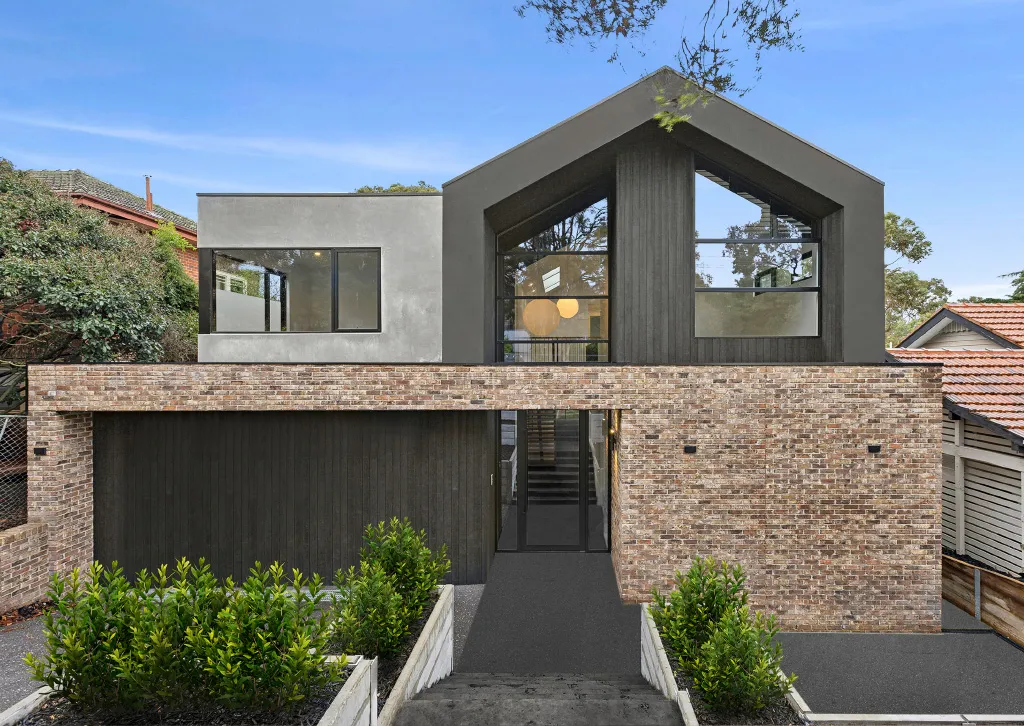
Building a dual occupancy development can be one of the smartest ways to increase the value of a property and create multiple income streams from a single block of land. Yet one decision often determines whether an investor achieves the best outcome: choosing between Torrens Title and Strata Title.
Over the past 35 years working on residential developments across Melbourne, we’ve seen investors focus heavily on floor plans, finishes and construction costs while overlooking subdivision strategy. In many cases, the title structure has a greater impact on resale value and long-term returns than the kitchen benchtops or façade selections.
The right option depends on your site, budget and exit strategy. Let’s look at how each title works and which one may suit your investment goals.

Why Title Structure Can Make or Break a Dual Occupancy Project
A dual occupancy development involves two self-contained homes built on a single parcel of land. These may be attached through a common wall or completely detached.
Before the homes can be sold separately, the land must be subdivided. This is where investors face a crossroads.
The Investor Mistake We See Too Often
A few years ago, we worked with a property owner in Melbourne’s south-east who planned to build two premium townhouses on a corner block. His assumption was simple: build two homes, sell two homes.
The problem emerged after the design phase. The site configuration made Torrens Title subdivision difficult due to frontage and access requirements. Significant redesign work became necessary.
The lesson was clear. Don’t put the cart before the horse. Investigate title options before committing to architectural drawings and permit applications.
The Simple Difference Between Torrens Title and Strata Title
At its core, the distinction is straightforward.
Torrens Title
- Separate ownership of land and dwelling
- No shared common property
- No owners corporation
Strata Title
- Individual ownership of a dwelling or lot
- Shared ownership of common areas
- Owners corporation responsible for common property
While both can work successfully, they suit different investment strategies.

Torrens Title for Dual Occupancy: Better Control, Stronger Resale, Higher Setup Cost
Many investors view Torrens Title as the premium subdivision option.
The reason is simple. Buyers generally prefer owning both the home and the land beneath it without shared ownership arrangements.
Why Buyers Often Prefer Torrens Title Homes
Torrens Title properties offer greater independence.
Owners can usually:
- Renovate without owners corporation approval
- Landscape freely
- Avoid quarterly strata levies
- Enjoy greater privacy
In Melbourne suburbs such as Bentleigh, Hampton, Beaumaris and Cheltenham, buyers often compare Torrens Title duplexes with freestanding homes. This broader buyer appeal can translate into stronger resale results.
A local agent recently described it perfectly:
“Many buyers see a Torrens Title duplex as a house rather than a unit, which widens the buyer pool.”
The Costs and Site Rules Investors Must Allow For
The benefits come with additional costs.
A Torrens Title subdivision commonly requires:
| Requirement | Typical Consideration |
| Separate water connections | Required |
| Separate sewer connections | Required |
| Independent electricity supply | Required |
| Lot frontage compliance | Council dependent |
| Surveying and subdivision plans | Required |
| Land title registration | Required |
Subdivision costs often range from $30,000 to $60,000 depending on the site and council requirements.
Approval timeframes can range from three to six months or longer.

When Torrens Title Is Worth the Extra Spend
Torrens Title often makes sense when:
- You plan to sell both dwellings.
- The site comfortably meets subdivision requirements.
- Buyers in the area strongly value land ownership.
- The anticipated resale premium exceeds additional subdivision costs.
For many Melbourne investors, this equation stacks up favourably.
Strata Title for Dual Occupancy: Lower Entry Cost, Easier Fit, More Shared Rules
Strata Title provides another pathway that can unlock development opportunities where Torrens subdivision is difficult or impossible.
Why Strata Title Can Suit Narrow Melbourne Blocks
Not every site offers generous frontage or abundant space.
Many inner and middle-ring Melbourne suburbs contain blocks where shared driveways and services are the most practical solution.
Strata subdivision allows:
- Shared accessways
- Shared infrastructure
- Greater flexibility on constrained sites
- Lower upfront subdivision costs
For investors working with tighter budgets, this can be the difference between proceeding with a project or abandoning it.
The Hidden Cost of Owners Corporation Levies
Strata Title reduces upfront costs but introduces ongoing expenses.
Common costs include:
- Building insurance
- Common area maintenance
- Administrative fees
- Future capital works contributions
For a small dual occupancy project, these expenses may be modest, but they should still be factored into long-term cash flow calculations.
When Strata Title Makes More Sense Than Torrens Title
Strata Title can be the better choice when:
- The site cannot achieve Torrens subdivision.
- You intend to retain both dwellings.
- Shared access is unavoidable.
- Development capital is limited.
- Rental income is the primary objective.

Torrens Title vs Strata Title: Investor Comparison Table
The following comparison highlights the key differences.
| Factor | Torrens Title | Strata Title |
| Ownership | Separate land ownership | Shared common property |
| Subdivision Cost | Higher | Lower |
| Ongoing Fees | None | Owners corporation fees |
| Buyer Appeal | Strong | Moderate |
| Capital Growth Potential | Strong | Moderate |
| Rental Yield | Good | Often stronger relative to entry cost |
| Development Flexibility | More restrictive | More flexible |
| Best For | Sell-down projects | Long-term holds |
Which Title Gives Better Rental Yield?
Rental yield and capital growth do not always move in the same direction.
Buy-and-Hold Investors: Cash Flow Matters First
Many long-term investors focus on yield.
Because Strata Title developments often involve lower upfront costs, the return on invested capital can be attractive.
For example, an investor who saves $25,000 on subdivision costs may recover that difference through stronger cash flow performance over several years.
Developers Selling After Completion: End Value Matters First
For investors planning to sell immediately after construction, resale value often becomes the key metric.
In our experience, well-designed Torrens Title dual occupancies frequently attract stronger buyer interest because purchasers value independent ownership.
This can significantly outweigh the additional subdivision cost.
Melbourne Planning and Approval Issues Investors Should Check Early
Subdivision decisions should never be made in isolation.
Local planning controls, site conditions and permit requirements all play a role.

The Pre-Design Checklist for Dual Occupancy Title Choice
Before spending money on detailed plans, consider:
- Zoning and overlays
- Minimum lot dimensions
- Frontage requirements
- Easements
- Stormwater drainage
- Vehicle access
- Utility connections
- Planning permit requirements
- Subdivision feasibility
A qualified surveyor and town planner should review these factors before design work begins.
Why Local Experience Saves Money
Melbourne councils can interpret planning controls differently.
We’ve seen projects in neighbouring suburbs face entirely different requirements despite appearing similar on paper.
That local knowledge often saves months of delays and thousands of dollars in redesign costs.
As we often tell clients:
“The cheapest mistake is the one you avoid before construction starts.”
Real-World Scenario: Two Investors, Same Block, Different Results
Let’s compare two hypothetical investors using similar sites.
Investor A Chooses Torrens Title and Sells Both Homes
Investor A develops two premium townhouses in Bayside Melbourne.
Timeline:
- Planning and permits: 6 months
- Construction: 48 weeks
- Subdivision: Torrens Title
Outcome:
- Higher subdivision costs
- Strong buyer demand
- Higher sale prices
- Greater development profit

Investor B Chooses Strata Title and Keeps Both Rentals
Investor B develops a similar project but intends to hold both homes.
Timeline:
- Faster subdivision process
- Lower setup costs
- Shared driveway arrangement
Outcome:
- Reduced capital outlay
- Stable rental income
- Lower immediate risk
- Suitable long-term investment performance
Neither investor made the wrong decision. Their title choice aligned with their strategy.
Which Option Is Better for Investors?
There is no universal answer.
The better option depends on your objectives.
Choose Torrens Title If:
- You want maximum resale value.
- You plan to sell the homes separately.
- The site can support separate services and access.
- Buyer appeal is a priority.
- Capital growth is your primary goal.
Choose Strata Title If:
- You want to minimise upfront costs.
- The site has physical constraints.
- You intend to hold the properties long-term.
- Shared infrastructure is unavoidable.
- Cash flow is the primary focus.
Questions Investors Should Ask Before Committing to a Dual Occupancy Design
The answers to these questions can shape the entire project.
Ask Your Builder, Surveyor and Planner These Questions
- Can the site achieve Torrens Title subdivision?
- What frontage requirements apply?
- Are separate services achievable?
- Will shared access be required?
- Which option delivers stronger end values?
- What are the likely approval timeframes?
- How will lenders assess each title structure?
- What are local buyers looking for?

Match the Title to the Exit Strategy
Torrens Title and Strata Title both have a place in successful dual occupancy developments.
If your goal is to maximise resale value and create two independent homes, Torrens Title often delivers the strongest result. If your priority is reducing upfront costs, working with a constrained site or holding both properties as rentals, Strata Title may provide the better path.
The key is making the decision early. Before engaging designers, before applying for permits and certainly before construction begins, speak with an experienced builder, surveyor and town planner.
A short conversation at the start of the project can save months of delays and help ensure your development strategy aligns with your investment goals.