

Because home is where the heart resides, you want to make sure that your residence reflects who you are in every way.
Whether you have been in your house for a number of years or you have just moved in, the living space you have should be tailored to the pursuits and requirements of your family.
You may take the house you now live in and transform it into the home of your dreams by undergoing some home renovations.
Your house is so much more than simply a physical structure to you.
It should be one of the most pleasant places you can imagine going back to because it is one of the most significant investments you have made.
If you find that your home is not providing you with the same level of satisfaction as it previously did, it is possible that it is time to invest in some home improvements.
Your perspective on a property can shift dramatically in a short amount of time if you are given a chance to make improvements, redesign it, and renovate it.
Keep reading this list if you've been considering remodelling your kitchen or bathroom, but you keep finding reasons why you don't want to move forwards with the project.
If this sounds like you, then you should definitely keep reading this list. The following is a list of justifications on why you should stop making excuses and finally improve your property.
Why Renovate?
To begin, a well-planned and executed remodelling project has the potential to increase the value of your house by thousands of dollars.
Many thousands, provided the conditions are favourable.
You can even tackle it yourself if you are truly determined on lowering costs and dedicated to being extra cautious (as we will go over in the following section, home improvement can be a risky endeavour for those who pursue it as a DIY project).
Second, whether you are considering renovating your residence or an investment property, you have more than a few financial options to choose from (renovation can help speed up the process of recouping a property investment if done correctly).
You are in a position to afford home improvements if you have already purchased a property and been able to qualify for a mortgage.
In the end, you should be able to understand that there is no reason why you can't reap the fruits of renovation with your own property, and we hope this is the case.
This article will help you make a decision about home building construction.
Here at MJS Construction Group, we’re committed.
You should consider remodelling your house for a variety of reasons, not the least of which is to make it a calmer and cosier environment in which you and your family can enjoy spending time together.
A safe refuge where one can come to unwind and unwind after a long day.
A central location where people may get together with their friends and family to celebrate the good times. However, there are many other advantages to modernising your home that go well beyond the ability to tailor the interior decoration to your preferences:
Increase Property Value
Raising your property worth is the most major benefit of upgrading your home.
A newer, more efficient, and attractive property can soon draw more prospective homeowners and higher offers than an antiquated home.
From a buyer’s standpoint, the more current upgrades you provide your home, the less labour is required for a new homeowner.
By modifying your home to make it bigger, increase the usefulness, or improve its looks, you may ensure improved kerb appeal and a greater return on investment.
Customise Your Home
Every family has its own specific demands, which shift and develop as the members of that family grow and get older.
Renovating your home can make your lifestyle easier by providing you with a living area that is tailored to your preferences and needs.
To make room for your rapidly expanding family, you should get some additional square footage.
Enjoy quality time with your loved ones by making use of a home theatre, ice rink, or swimming pool.
Enhancing your standard of living might be as simple as renovating your kitchen, bathroom, or laundry room.
Since you have already made an investment in your home, why not personalise it to better suit your requirements and preferences?
Save on Maintenance and Utility Costs
Dibico can help you save money on the costs of repairs and utilities.
Your house is made up of separate components, each of which will wear down over the course of time and use.
The older your home becomes, the more it will cost you to maintain it.
As your home's appliances get older and less efficient, the amount of energy they use will continue to rise.
Fixing even the smallest of issues costs time and money, which becomes an increasingly prohibitive burden the longer the issue is allowed to fester.
Renovating your home can fix these problems before they become more serious, improve the functionality of your home, and reduce the amount of money you spend on upkeep and utilities.
Increase Comfort
A house can be a haven of peace and protection for you and your loved ones.
Because here is where you spend the bulk of your time, the walls there have seen the majority of the critical moments in your life.
When you step into your home, you want it to be a place that helps you feel better mentally and emotionally and minimises the amount of stress you are experiencing.
You may create a living space in your home that provides the highest possible level of both comfort and security if you decide to renovate it.
Your makeover may also improve the functionality of your home, which will make your daily life at home easier and provide you with additional time to devote to the things that are important to you.
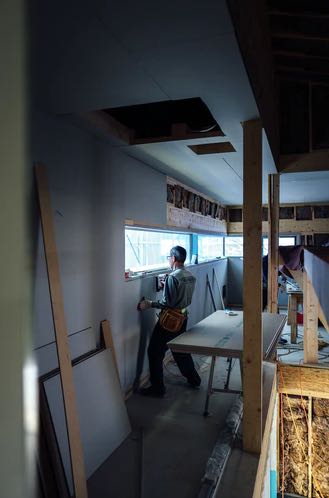
What Should You Renovate?
Renovating your house can add a significant amount of value to it, as we have probably already mentioned an excessive number of times in this piece.
On the other hand, let us be clear. It is imperative that these are the appropriate renovations. In that case, they have a good chance of lowering the value of your home.
(You do not receive any points for making aspirational improvements. That verandah you never felt like completing. Take, for instance: Not quite as valuable as you may have hoped.)
Having said that, you should consider performing renovations even if you have no plans to sell the property in the foreseeable future.
You might desire additional space or a location that is of higher quality.
However, just because you are considering a makeover — and especially if you are considering getting a loan for the restoration — this does not imply that you cannot be resourceful when it comes to the remodelling.
Why not make sure that the additional space you want to have is as beneficial to you monetarily as it is for your comfort and the requirements of your lifestyle?
Keeping all of this in mind, what sorts of improvements should you make to your home? To begin, allow me to offer you the following as a suggestion:
Tidy Up The Front: Many makeovers are focused more on the value that is perceived than the actual value that is added. This is the quintessential illustration of that phenomena. Assume that you are willing to put in some real work to clean up your garden, wash and repaint the exterior of your house, fence, and letterbox, give your roof and gutters a bit of a scrub, and just generally give your property a bit of tender loving care. In this scenario, you have the opportunity to increase the value of your home by more than $40,000.
Include an Outside Space: Whether it's a deck, verandah, patio, or terrace, including an outdoor space on your property is a surefire method to increase the value of your home.
The cost can vary (especially if you are knowledgeable enough about construction to execute a respectable job on your own), but the return on investment will almost always be great.
Some industry professionals believe that it adds an additional $10,000 to the cost of a house, while others go as far as to suggest that it adds $100,000.
Just keep in mind that in order for your outdoor space to be of the highest quality in both use and value, it should be a natural outgrowth of your existing home or property.
Planning to build a home? MJS Construction Group brings your building project alive! It shouldn't extend from a bedroom or a private area, but rather a social space, and it ought to have a similar design.
Renovating your kitchen and bathroom can have a subtle but significant impact on the overall value of your property.
Kitchens and bathrooms are universally regarded as main places of interest for prospective buyers and tenants.
You can bring these places up to date in a variety of ways, such as by merely adding a backsplash tile arrangement to your kitchen, entirely remodelling your bathroom, or simply giving both of these rooms a fresh coat of paint.
Just make sure you don't put too much money into it.
Renovating your kitchen and bathroom should feel as natural as redecorating your outdoor space because they are both essential parts of your home.
In other words, the kitchen shouldn't be worth more than the rest of the house because it would be inappropriate.
Adding an extension to your home is likely one of the most significant ways to increase its value.
Not only will you be able to add value to your home if you add a second story, a new bedroom, a new bathroom, or a new garage (or some combination of the aforementioned), but you will also be able to completely change the overall pricing bracket that real estate agents and potential buyers view your home in.
In this regard, you absolutely must take precautions to avoid overinvesting your money.
For instance, if every home on your street has between two and three bedrooms, then most buyers shopping in that neighbourhood likely be interested in purchasing a home of that size.
Nevertheless, even if you are aware of these risks, you can still significantly increase the value of your property by remodelling either the bathroom or the garage.
According to the findings of a survey conducted in 2012 among real estate brokers in Australia, a second bathroom is one of the most important features that homebuyers in Australia look for.
These are merely some of the available choices, of course.
You might also consider hiring a landscaper or applying a concrete rendering over the older brick stylings of your property to bring it up to date.
Whatever you decide to do, just make sure that you have a good idea of how much it will set you back and how much value it will bring to your home.
If you are unsure, you should discuss the matter with a real estate agent. Looking for accommodations with room for two? No need to look any further! You are in good hands with MJS Construction Group.
Should You Renovate Your Home Or Move?
There are various benefits and drawbacks associated with either option, and the response that is right for you will depend on the reason why you need to make a change and what you want to achieve with your property.
Suppose you are considering a home improvement project. In that case, it is imperative that you give careful consideration to how it will influence your life and budget, particularly when contrasted to the alternative of moving.
Benefits of Renovating
- Renovating your current home ensures that you will remain in the same location if you are content with it.
- location. You always have the option to look for another property in the neighbourhood to purchase. This may reduce the number of options available to you and result in increased expenses.
- You will not be responsible for the expenses that are associated with purchasing a home, such as the stamp duty and the fees charged by legal, registration, and real estate agents.
- It is possible that the modifications will increase the value of your property. And you don't even have to completely gut the place; even minor adjustments can have a significant impact on the overall quality of the space.
- Stay away from the inconvenience and stress that comes with moving.
Things To Consider Before Renovating
- If you are not one hundred percent content with the location of your home, no amount of remodelling can ever make you that way.
- It is simple to underestimate the amount of money and time that will be required to complete renovations. Make sure that you are aware of all of the pertinent information and that you have a money and a time cushion in case things do not go according to plan.
- Because of the current state of your property, it is possible that you will be unable to undertake all of the improvements that you have planned for it. You can be sure that things like dry rot and white ants won't prevent you from achieving your goals by having a building and pest inspection done.
- It's possible that you'll have to find temporary housing elsewhere while the repairs are being made.
How Do I Afford It?
Naturally, none of this is relevant if you lack the financial resources to carry out the restoration project of your dreams, which takes us full circle to the challenge we set out to solve at the outset.
Is it too much of a luxury to renovate the house? Would you be able to afford it at any point? In addition to that, we are going to stress this point.
There are a variety of channels through which you can make financial contributions to your remodel.
Take, for instance:
Refinance Your Current Home Loan: If you are already making on-time payments on your home loan (especially if you have been doing so for a couple of years), you may want to consider simply reworking the terms of your current loan arrangement in order to save money.
This is known as refinancing. Depending on the specifics of your situation, you can accomplish this in a number of different ways.
To begin, one of your options is to submit an application for a larger loan amount.
Instead of starting over with a brand new loan, this will be added to the balance of the one you already have.
There are a variety of words that various lenders may use to refer to this.
Some people may refer to it as a loan for home improvements.
Some people will refer to it as a topping off. In the end, they both point to the same conclusion.
You take out a larger loan, and with the added money, you make improvements to your residence.
Second, depending on the specifics of your house loan, it's possible that you could benefit from certain pre-existing options.
To be more specific, cashback and withdraw.
Suppose your house loan allows for cashback or redraw and you have been making additional payments towards your principal balance.
In that case, you may be eligible to withdraw the additional money you have been paying towards your loan and put it towards funding your home improvement project.
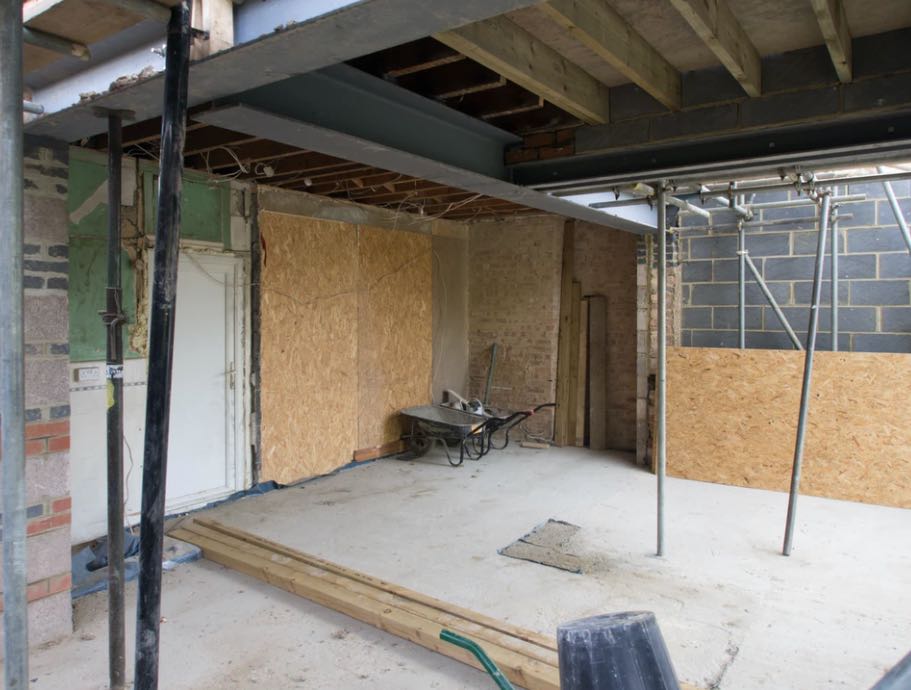
Finally, it would be best if you considered talking to your current lender about refinancing your house loan and modifying the terms of your mortgage.
For instance, if you have a credit loan line, you can utilise your mortgage loan account just like a credit card account.
You will easily be able to use that money to pay for your refurbishment if you refinance your current loan and convert it into a line of credit loan.
Your current equity in your house will, however, be the most important factor in determining which of these possibilities you are able to explore.
If you have already paid off a significant portion of your loan, you will be in a better position to make modifications to your loan so that you may pay for home improvements. In that case, you might have to look at other available options.
Loan for Construction: A construction loan is one example of another possibility that might be considered.
It is more common to utilise a construction loan to finance the building of an entirely new home, but this type of loan can also be put towards the renovation of an existing property.
The worth of your home determines a construction loan after it has been completely renovated. (Consequently, given the circumstances, you will need to ensure that the improvements you make to your property increase its worth.)
You will withdraw from the funds provided by a construction loan on an as-needed basis to pay for the various supplies and services (rather than receiving them as a lump sum).
Loans for individuals are available from a variety of creditors, and these loans can either be secured or unsecured, depending on the borrower's preference.
Consider applying for a personal loan if you want to do some work on your own and require only a little sum of money for the necessary supplies.
However, regardless of how small the sum is, you should still most likely put it in a term deposit, safeguard it against property, or both. If such is the case, the interest rate that you are expected to pay will almost definitely be greater.
Credit Card: Paying for your home improvement with a credit card is an option that should not be discounted. However, doing so is not something that is particularly recommended.
Suppose you are not vigilant about keeping track of your repayments.
In that case, you might very soon find yourself sinking deeper into debt and spending a great deal more money on your home improvement project than the project is actually worth.
If you are going to use a credit card, you should be strategic about it; you should plan your repayments in great detail, and you should take advantage of any interest-free periods that may be available.
Finding the best home builders in Melbourne is a crucial decision that must be made. See our list of available builder services melbourne to help you make an informed decision for your treatment.
When your savings account balance reaches zero, some financial institutions allow you to continue withdrawing money up to a predetermined limit.
This type of account is known as having an overdraft (which you then repay with interest as you would any other loan).
You will only ever be required to pay interest on the particular amount of money you've spent on your remodelling if you use an overdraft.
Another benefit of using an overdraft is that it may be added to your existing transaction account in a reasonably short time.
The drawback is that, similar to credit cards, if you don't carefully manage your finances, you could find up falling deeper into debt than you were in the first place.
If it seems like you've been contemplating house improvements for what seems like forever, it's time to stop wishing for things to be different and start making them happen.
There is never going to be a point in time when both your agenda and your resources are "ideal" for a home improvement project to begin.
However, the longer you put it off, the less time you will have to enjoy your stunningly updated home after it has been remodelled.
With any luck, these arguments will persuade you to finally put an end to your procrastination and get started making your aspirations for a home remodelling a reality.
Your outlook on going home will shift more positively once you have completed a home improvement project.
Conclusion
If you find that your home is no longer giving you the same joy it once did, it may be time to make some upgrades.
The amount of money you can get for your home after remodelling depends on how well you plan and carry it out. Using Dibico, you may cut costs on maintenance and utilities.
More people may be interested in purchasing a home if it is newer, more energy efficient, and more aesthetically pleasing. A simple kitchen, bathroom, or laundry room remodel could have a significant impact on your quality of life.
Having a safe and secure place to call home can provide much-needed solace and security.
These issues can be remedied in the form of less severe ones through home renovations.
It can also make your home more comfortable and save you money on utilities and repairs. Improving the kitchen and bathroom can raise the value of your home subtly but noticeably.
There is a school of thought amongst experts that says it raises the price of a home by at least $10,000.
You should exercise caution before investing too much money. To Remodel or to Relocate—That Is the Question.
Each choice comes with its own set of advantages and disadvantages.
If you are considering a home renovation project, it is vital that you give great attention to how it will effect your life and budget.
If you're happy where you are, renovating your current house is a surefire way to avoid uprooting your family.
Your home's worth may rise as a result of the renovations. The quality of a room can be greatly improved by making even small changes.
If you are currently making your mortgage payments on time, you may want to explore refinancing your home loan instead.
This process is known as refinancing. You increase the size of your loan in order to finance the renovations you plan to make to your home.
If you're interested in striking out on your own, you might wish to apply for a personal loan.
The borrowers have the option of having their money in a secured or unsecured loan.
It's important to remember that using a credit card to fund home improvements is a valid option.
Some banks will let you keep withdrawing up to a certain limit from your savings account even after the amount has reached zero.
If you get an overdraft to finance your renovations, the interest you pay will never exceed the total amount you've spent.
Content Summary
- If you find that your home is not providing you with the same level of satisfaction as it previously did, it is possible that it is time to invest in some home improvements.
- The following is a list of justifications on why you should stop making excuses and finally improve your property.
- You are in a position to afford home improvements if you have already purchased a property and been able to qualify for a mortgage.
- Renovating your home can make your lifestyle easier by providing you with a living area that is tailored to your preferences and needs.
- Enhancing your standard of living might be as simple as renovating your kitchen, bathroom, or laundry room.
- It is imperative that these are the appropriate renovations.
- Renovating your kitchen and bathroom can have a subtle but significant impact on the overall value of your property.
- Renovating your kitchen and bathroom should feel as natural as redecorating your outdoor space because they are both essential parts of your home.
- Adding an Extension to Your Home Adding an extension to your home is likely one of the most significant ways to increase its value.
- Not only will you be able to add value to your home if you add a second story, a new bedroom, a new bathroom, or a new garage (or some combination of the aforementioned), but you will also be able to completely change the overall pricing bracket that real estate agents and potential buyers view your home in.
- It is simple to underestimate the amount of money and time that will be required to complete renovations.
- Finally, it would be best if you considered talking to your current lender about refinancing your house loan and modifying the terms of your mortgage.
- Consider applying for a personal loan if you want to do some work on your own and require only a little sum of money for the necessary supplies.
- Paying for your home improvement with a credit card is an option that should not be discounted.
- When your savings account balance reaches zero, some financial institutions allow you to continue withdrawing money up to a predetermined limit.
- You will only ever be required to pay interest on the amount of money you've spent on your remodelling if you use an overdraft.
- Your outlook on going home will shift more positively once you have completed a home improvement project.
FAQs About Renovating Your Home
Property renovation can help you as a property owner to add value to your property, improve its appeal and appearance, get more sense of satisfaction, or even improve your lifestyle. To make a good house renovation, you must have a good working plan.
The report found that three-quarters of the 10,000 respondents plan for renovations rather than making a down payment. Still, the preference to renovate over moving gets stronger with age, as homeowners are more likely to have greater home equity and more savings in the bank.
Consider the season before undertaking a remodelling project. Winter is a great time for indoor renovations if you're looking to save a few dollars because contractors usually look for work in the off-season. For outdoor projects, weather conditions will probably be the determining factor.
Bottom line, generally, you're less likely to recoup your investment the more you spend on a renovation. Basic home maintenance and smart updates, such as replacing the garage door or updating the house siding, will get you the most back. Of course, your ROI slips to 0% if you plan to stay in the home forever.
Summer is the most popular time of year to renovate. Folks emerge from the holiday season ready to start planning, and therefore construction starts a few months later during June, July and August.



