

Thinking of giving your house a facelift? Perhaps you ought to reevaluate your position.
You can get the impression that remodelling your home is a given if you watch enough home improvement shows or read enough popular blogs or websites about home renovation.
Your neighbours will be proud to show off their own renovations and will gladly give you the name of the contractor they used.
Redesigning a home, however, is not a good fit for every homeowner or every residence.
Think twice before starting that long-awaited home improvement project until you've exhausted all the potential downsides.
Instead of selling their homes and starting over, many people opt to fix them rather than go through the emotional upheaval of moving.
But which renovations should actually be undertaken?
Avoid the temptation to put good money into dubious investments.
I'll break down the best times to update your home and which renovations will yield the highest returns in this piece.
Aussies Love A Home Reno.
The Housing Industry Association reports that in 2019, Americans spent over $36 billion on home improvements (HIA).
Even if a well-executed renovation has the potential to increase the value of a house or investment property significantly, it's important to consider whether the disruption caused by such a project is truly worth the potential gain.
So, it's important to consider the added value versus the effort required.
Because of the high cost of real estate in Australia, particularly in Sydney's eastern suburbs, more and more people are opting to stay put and enhance their current dwellings rather than upgrading or moving elsewhere.
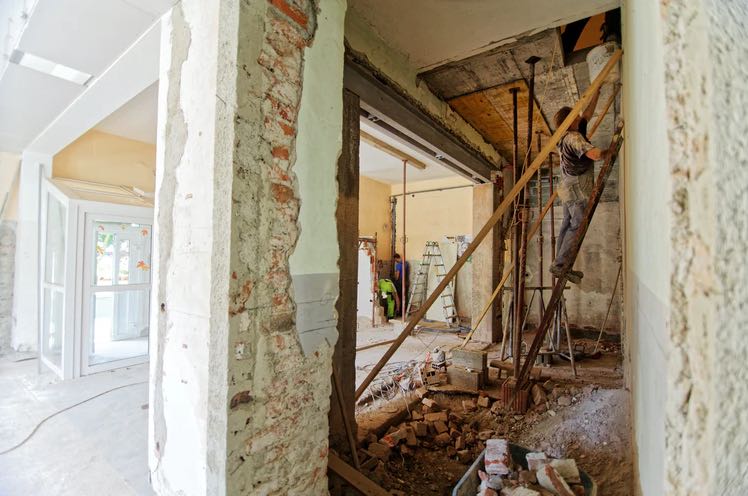
It may be more cost-effective to stay there and refurbish when property values are high because of the potential changeover charges, such as stamp duty, relocation costs, and legal fees.
However, as prices level out or decline, more people may decide to sell and move up the housing ladder.
They can try to close the deficit even further by investing in renovations to increase the home's worth before selling. At MJS Construction Group, we offer a wide range of duplex build.
What’s The Value Of Renovating In Today’s Market?
Several criteria, such as your intended market, location, the scale of the improvement, and the quality of the work, will determine how much of a return on investment a major makeover will yield for your home.
Focusing on architecture is a great method to increase the value of your home during a renovation in the eastern suburbs, especially if you live in Paddington or Woollahra.
The best East of the City remodels always seem to centre on one particular aspect of architecture or design.
They are impressive in some way that will make your target audience eager to buy them.
In addition, the fixtures and finishes, which are often overlooked in renovations, must be of the highest quality and standard for the project to be deemed a success.
Extending the number of bathrooms in a terrace house is one example of a worthwhile remodelling.
Terrace homes with one bathroom are about $100,000 less expensive than those with two.
However, this does not necessarily mean that the bathroom is the deciding factor; the entire offering must be satisfactory for a buyer to commit.
If your present kitchen is looking antiquated, investing in a new one may be a good way to get the most value for your money.
Renovating your kitchen can increase your home's worth by as much as $60,000, but it may only cost you $10,000.
Is Home Remodeling Worth It?
You May Not Break Even
You spend $500,000 for a home, invest $50,000 in renovations, and then sell the property for at least $550,000. Where do you stand financially?
There are several variables at play in a home sale, making it impossible to isolate their individual effects.
The value of a home can be affected greatly by factors that have nothing to do with renovations, such as the local economy, nearby sales prices, mortgage interest rates, and more.
Substantial kitchen renovations, second-story expansions, and bathroom updates are examples of the kind of home improvements that typically yield a good return on investment.
The resale value of other renovations is low.
Find out how much your home renovation project will affect its resale value and face facts. It's possible that the pirate-themed office you designed is meant solely for your use and won't appeal to potential buyers.
Eco-Friendly Remodels Are Still Difficult
Homes today are more environmentally friendly than ever thanks to technological breakthroughs. However, renovation always involves some degree of waste.
Consider the 40 cubic yards of drywall, wood, carpeting, vinyl flooring, wire, and glass that will fill your dumpster during your next kitchen remodel. Plus, think of all the power that went into creating and delivering the materials.
If you want to do your part for the environment, however, your next renovation project need not be compromised.
To help those who are unsure of the best way to proceed, LEED experts are available.
Kitchen and laundry appliances should always be EnergyStar certified.
Home Remodels Can Fray Relationships
Marriages and other close relationships are especially vulnerable to the destructive effects of home renovation.
You may reclaim your life by striking a healthy balance between remodelling and enjoying a full, rewarding life with the people you care about. Learn much you can about maintaining happy relationships.
Hotel costs should be factored into the budget for any major renovation that will render a significant room unusable for an extended period of time.
See our list of available builder services melbourne to help you make an informed decision for your treatment.
Costs Always Seem to Rise, Not Fall
If you know a contractor that can complete a bathroom renovation on time and within price, hire them immediately.
In reality, however, large-scale remodelling projects are plagued by change orders that drive up costs and push back completion dates.
Costs have a funny way of creeping up, even for relatively minor renovations.
Acquire a reliable, impartial estimate of your remodelling budget. After that, add 25% to everything, including the price and the time frame, in your head.
Some Home Projects Are Difficult to DIY
DIY home improvement is the rallying cry of countless television shows and online publications.
Bloggers who are really into their homes will do things like putting in new air conditioners or furnaces, extending their dwellings, covering their roofs with metal, raising the foundation, insulating the attic, and putting up siding.
Interior painting, floating floor installation, electrical outlet replacement, and creating minor items like benches and coat racks are all examples of work that can be completed in a clean and organised fashion.
However, the costs might mount quickly if you try to tackle a complex project on your own but quickly realise you need outside help.
You can avoid this issue by classifying projects as either DIY or professional help needed.
Contrast your initiatives with the home renovation talents you can clearly demonstrate you already possess, rather than the ones you aspire to acquire.
You Might Get Scammed, so Be Careful
You'll get nothing in life if you spend your time fretting about being taken advantage of.
However, it's always wise to proceed with caution before beginning a massive home improvement project that might easily cost five or six figures.
Scammers that prey on people looking to get work done on their homes are a reality, and they are actively seeking new victims.
Criminal contractors prey on the trusting because they know they can make a lot of money off of them.
Con artists frequently focus on home improvements that take place on the exterior, like new driveways or roofs.
Some people, though, function in ambiguity.
Although insuring water pipes is a respectable industry, it may not be necessary for your property.
Mould removal is a real profession, but unfortunately, many con artists use it to cheat unsuspecting homeowners out of their money.
Find reliable contractors by doing your homework to avoid fraud.
You should approach the contractor rather than the other way around. Unsolicited visits from contractors are a red flag for potential fraud.

Can you explain why you think a kitchen redesign costing that much money is essential? An unappealing but practical kitchen can usually boil an egg just as well as a spotless kitchen with enough for twelve at the breakfast bar.
In many cases, homeowners will renovate a kitchen or bathroom for no good reason at all.
Your decision to redesign may be influenced by factors external to you, such as low home equity rates, positive feedback from home makeover shows, or pressure from friends and neighbours.
There are no valid arguments in favour of a renovation.
Prior to starting your next home improvement project, please give it some serious thought.
Learn that you need not feel guilty about deciding against the renovation.
When Is Home Renovation Worth It?
Let's start with three cases where it makes sense, financially or emotionally, to make home improvements:
Your home isn’t functional for your needs
Are you in the unusual situation of having to pass past a bedroom en route to the bathroom? Does your kitchen have half-broken appliances?
To the extent that your home's condition prevents you from sleeping, eating, or using the restroom comfortably, you should consider remodelling it, given that you can afford to do so.
Considering a new project? Then MJS Construction Group builders Melbourne is the answer.
Making investments of both time and money into home improvements can boost your long-term satisfaction with your dwelling and increase its desirability to potential buyers.
MJS Construction Group provides the most comprehensive suite of dual occupancy builder services in the industry to aid you in erecting the home of your dreams.
You can save money
If your home is older and draughty, you can reduce your monthly costs by making a few upgrades, such as adding energy-efficient windows and doors.
A garage may be worth the investment if you are currently paying a high monthly fee for storage.
Maybe you already knew this, but having your own home gym might save you a lot of money on gym membership fees.
You should consider not just how much money the renovation will cost, but also how much it could save you in the long run if you plan to keep living in the house once the work is done.
Your home isn’t competitive in the marketplace
If you plan on selling your house soon or soon afterwards but are aware that it is dated in contrast to others in the region, updating it can give you a leg up on the competition.
Never Over-Improve Real Estate
It's easy to go overboard when making renovations to your home, so it's important to take your time before getting started.
Over-improvement occurs when a homeowner spends more money on renovations to their home than they can expect to recoup when they sell the property.
Many people mistakenly believe that if they spend $25,000 installing a pool in their backyard, their home's value will instantly increase by the same amount. Sorry to break it to you, but that's not how the system functions.
The amount of money put into a remodelling project virtually never returns a return on investment that is directly equal to the size of the project.
Therefore, you should exercise caution when determining whether or not to renovate.
If you do decide to redesign, you should prioritise which projects would provide the most return on investment.
It's not always the case that bigger is better.
Most people wrongly believe that the more work they put into their homes, the more it will improve in value.
However, this is not always the case, especially if your home is the most expensive on the block.
Most buyers avoid the most expensive homes because those in the best areas tend to fetch a higher price upon resale.
These buyers would rather spend the same amount of money on a home in a more desirable area.
Inexpensive Ways to Improve Your Home
If you're planning on selling your property in the near future, you should consider less expensive measures to improve its kerb appeal before making any major renovations.
If a prospective buyer does not get the idea that your house is neat, tidy, and well-kept from the outside, they may not even bother to make an offer.
If you're looking for a high-quality, affordable builder in Melbourne, you're in the right place!
Check MJS Construction Group! If this occurs, you will have wasted your time trying to sell your house.
Here are three ideas to help you brighten up your house without breaking the bank:
- You should paint over any areas of the outside that are chipping or have faded. House painting is the most cost-effective improvement you can make to your property. When compared to other home repair jobs, painting is among the most transformative, straightforward, and economical options.
- Do your best to make the lobby presentable. As the first thing people see when they visit a home, the front door should always be spotless. Having a fresh doormat and some blooming plants or flowers on display might make a possible buyer feel more at ease as they approach your home.
- The lawn in front of your house needs to be trimmed. Investing in new plant beds, new mulch, and the removal of dead tree limbs is a worthwhile use of capital.
Should You Renovate Before Selling?
The decision of whether or not to modify your property is highly individual and cannot be reduced to a single factor.
Renovating your home before selling it can be a wise decision sometimes, but other times, you won't get a return on your investment or notice a change in how quickly the house sells.
If you spend money now, it's because you believe your home's potential buyer will appreciate the upgrade.
Instead of trying to second-guess the buyer's preferences with your own cash, it's better to focus on finding the suitable buyer and talking through their issues.
Small-scale improvements that a wide audience can appreciate, such as fresh coats of paint or landscaping, yield the highest return on investment for homeowners.
At MJS Construction Group, we have the best dual occupancy selection to make your house a dream come true.
The best approach to get the most money out of the sale of your property is to use a salaried agent who charges a fair flat price rather than an agent who works on commision.
The best of our agents will be forthright in letting you know what needs fixing and what will provide the greatest return on investment while also fighting hard on your behalf throughout the price negotiation process.
Conclusion
But not every homeowner or every house is a good candidate for a redesign. Over $36 billion was spent by Americans on renovations this year (HIA).
Think about how much value you'll add vs how much work a remodel will take to complete.
Depending on the scope of the project, a kitchen remodel may cost as little as $10,000 but add as much as $60,000 to the value of your property.
A home's worth can be significantly impacted by external factors like the state of the economy and mortgage rates that have little to do with the quality of the improvements.
Appliances in the kitchen and laundry room that contribute to LEED points must be EnergyStar certified.
If a room will be out of commision for a lengthy period of time due to renovations, hotel expenses should be included in the overall cost estimate.
Even for modest improvements, costs have a funny way of multiplying. Con artists target homeowners who are having work done on the outside of their homes, such as installing a new driveway or a new roof.
Unfortunately, many con artists exploit the legitimate business of mould removal as a front to rip off naive homeowners.
In terms of dual-occupancy home construction, MJS Construction Group offers the market's fullest menu of services.
It is called "over-improvement" when a homeowner invests more money into their home's renovations than they can recoup through a sale.
The common misconception is that homeowners will see a return on investment proportional to the amount of work they put into improving their property.
Not everything requires a larger size.
Painting your home is the most bang for your buck renovation project. A buyer may decide not to make an offer if they do not get the impression that the exterior of the house is neat, tidy, and well-kept.
For reasonably priced, high-quality renovations, contact MJS Construction Group. Sometimes it's a good idea to do some renovations before selling your property, but other times it won't be worthwhile.
Using a paid agent who charges a fair flat price is the greatest way to maximise your profit from the sale of your property.
Content Summary
- I'll break down the best times to update your home and which renovations will yield the highest returns in this piece.
- Focusing on architecture is a great method to increase the value of your home during a renovation in the eastern suburbs, especially if you live in Paddington or Woollahra.
- The resale value of other renovations is low.
- Find out how much your home renovation project will affect its resale value and face facts.
- Acquire a reliable, impartial estimate of your remodelling budget.
- You can avoid this issue by classifying projects as either DIY or professional help needed.
- Find reliable contractors by doing your homework to avoid fraud.
- There are no valid arguments in favour of a renovation.
- If your home is older and draughty, you can reduce your monthly costs by making a few upgrades, such as adding energy-efficient windows and doors.
- It's easy to go overboard when making renovations to your home, so it's important to take your time before getting started.
- If you're planning on selling your property in the near future, you should consider less expensive measures to improve its kerb appeal before making any major renovations.
- House painting is the most cost-effective improvement you can make to your property.
- The lawn in front of your house needs to be trimmed.
- The decision of whether or not to modify your property is highly individual and cannot be reduced to a single factor.
- Renovating your home before selling it can be a wise decision sometimes, but other times, you won't get a return on your investment or notice a change in how quickly the house sells.
- If you spend money now, it's because you believe that the potential buyer for your home will appreciate the upgrade.
- The best approach to get the most money out of the sale of your property is to use a salaried agent who charges a fair flat price rather than an agent who works on commision.
FAQs About Renovating
With a full kitchen renovation, homeowners can recoup about 59% of the cost. A new master suite will typically return 50%, according to a study from the National Association of Realtors and the National Association of the Remodeling Industry.
3 Types of Home Renovations to Boost a Property's Resale Value
- Basic Renovation.
- Cosmetic Renovations.
- Personal Renovations.
To update and modernise your home. Renovations will typically be cheaper than moving house. Improvements can add value to your property when you come to sell.
House flipping (also known as 'fix and flip', 'property trading' and 'fix to sell') for profit is a simple strategy. You find a property that needs renovation, and you purchase it for a low price. Then you renovate the property to make it more attractive to buyers and sell the property for a higher price.
An architect or a designer can be hired by the owner to develop approved plans for the project. The person who does the remodelling has to be a licensed contractor. Sometimes a general contractor hires subcontractors for large projects.



