

Should I hire an architect to help me with this? Certainly, that is the right thing to enquire about. Architects are licenced experts in their field.
Similar to doctors and lawyers, they have completed rigorous academic programmes served in intensive internships and scored well on a battery of professional exams.
They have studied not only buildings but also landscapes, as part of their schooling.
To better serve their clients, architects can now consider a wider range of options and devise more creative solutions.
In contrast to a builder or home designer, who might make alterations at your request, an architect should be able to foresee your needs.
In the midst of a big endeavour, realising that you're misplaced or running out of supplies can be a scary realisation.
This holds true regardless of how big your construction or design project is.
People decide to hire an architect when they realise they need help beyond what they can supply on their own, or when they want to make sure the job is done right by someone with experience in the industry.
How Do Architects Work?
Architects have been known to "wear several hats" when working on complex projects.
They could think of the idea, direct the design and drawing, select the materials, and manage the whole manufacturing operation.
In a perfect world, your architect would visit the site where the building will be constructed, observe the sun and wind patterns, make a drawing of the existing vegetation, and make educated guesses about the best possible views.
An architect is someone who knows how things work physically and has a good eye for symmetry and proportion when it comes to designing a new building or renovating an old one.
The architect's role in some projects may be limited to providing design drawings.
An architect can be hired to make changes to a stock design if you find one quite close to your ideal home. Compared to starting from scratch, the cost of making changes to an existing floor plan is usually always lower.
A professional architect will sit down with you and your loved ones to discuss your needs and wants before moving forwards with the design process. To better understand your needs, the architect will ask questions like:
- Whose family will be occupying this home? Just how old are they, exactly? Whom might you be responsible for soon? To what extent do you seek out areas that encourage tv-watching in large or small groups?
- What is the value of having both a casual and formal eating area?
- How often do you throw parties? How easy should it be for large parties to use the kitchen?
- How much time do you spend relaxing in bed during the day? Or is the bedroom merely a place to sleep?
- Do you want some peace and quiet to work on your computer? Alternatively, would a centrally positioned media centre be preferable so that parents can keep an eye on their kids as they watch TV?
- Tell me about the issues you're having with your current residence. What exactly do you enjoy most about your current residence?
- Have you adopted your car?
Regardless of the size of your budget, skimping on the design won't save you any money in the long run.
Working with trained experts who can steer you away from bad decisions could save you a lot of money and make sure your new house is ideal for your needs.
This article will help you make a decision about home building construction. Here at MJS Construction Group, we’re committed.
Tips to Keep in Mind Before Engaging an Architect
A Comprehend of Qualified Opinions
There is a certain degree of openness required to consider bringing in an outside expert for any purpose.
However, if you're considering hiring an architect, you should be aware of how flexible they'll need to be for your specific project.
Architects are highly trained professionals who spend years learning about things like building codes, structural design, and aesthetics. ...
To get the most out of your architect's services, it's crucial to be receptive to their suggestions and input.
In order to ensure a smooth and successful accomplishment of the task, it is important to stay open to the advice of professionals even if you have a clear picture of the outcomes you wish for the project.
Keep an Eye on the Clock
There will be a delay in starting the project since the architects need time to set everything up. In the beginning, you'll have to create a chronology, and the length of time the timeline needs to cover can bother you.
Your project can't really advance meaningfully until issues like building rights are settled.
There are many steps and obstacles to overcome, so be flexible with your timeline to ensure that you have enough time to do the excellent work that will result.
To build a house from scratch or to renovate an old one requires strict adherence to tight deadlines that have been carefully established.
If you're thinking about bringing in an expert, make sure you have time to do your own research and give yourself and the hired help enough time to do the job effectively.
First, You Need to Achieve Budget Parity.
Hiring an architect is no different from any other type of professional service in that it comes with a price tag.
To avoid delays and misunderstandings later on, you should have all of your financial needs established before starting the job.
Discuss these with the architect to see whether he or she can design the building to meet your needs while adhering to the constraints you've set.
It's crucial that you and your stakeholders have a firm understanding of the project's scope and final cost.
If the budget is tight, it's important to keep your expectations for the project's duration realistic.
Choosing the best Melbourne home builders is an important step.
Take Lessons From The Future
Good professional architects consider the long-term effects of their decisions, no matter how urgent it may be to complete a project.
So that you don't have to put any more money into it, you want this project to be a success, and you want a classic house that doesn't incorporate any cutting-edge features that would quickly look antiquated.
You should expect feedback that could lead to immediate changes that boost the project's viability, the building's value, and its adaptability in the future.
Make sure the architect you employ is a seasoned pro with an in-depth understanding of structural integrity and can assure you that your home will stand the test of time.
Discover a Top-Notch Architect by Asking Around
For larger projects, it's best to find an architect who really is genuinely interested in working with you because you'll be spending a lot of time together.
Therefore, it is crucial that you feel at ease within the context of a professional team. With this person, you should be able to relax and trust that your needs and desires will be met in a timely and satisfactory manner.
Get references, ask for photos of previous work, and check if you like the person's style before you hire them.
You can have more realistic expectations for the project and for the working relationship with the architect if you learn about the architect's past experiences working with other clients.
At Other Times, It Takes a Village
Your hired architect might need extra heads and hands to do the job, depending on how complicated your project is.
This implies you'll have to pay more because you'll have to employ more people, possibly even an entire architecture firm.
If you're interested in joining an architect's team, you should be ready to start working with others.
Given this assumption, it becomes even more important to recruit someone whom you trust, as that individual will likely be in charge of assembling their own team of specialists. It is to everyone's best advantage if you take the time to look into the situation and make sure that everyone involved meets your high standards.
Things Are Bound to Get Messy
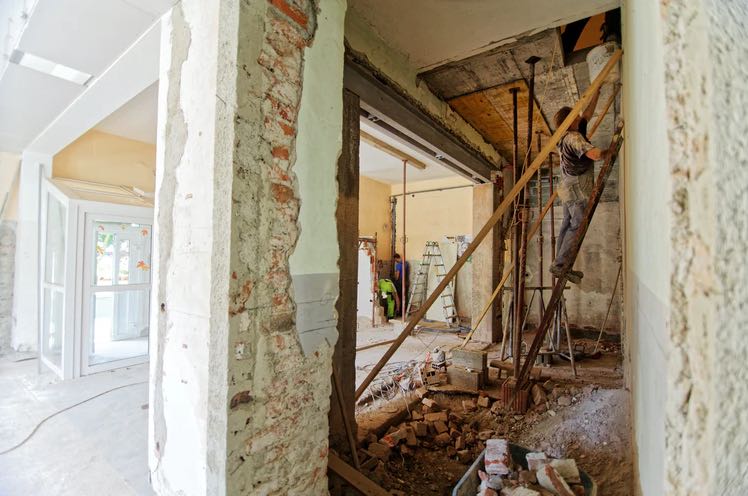
An architect's career revolves around construction. Still, knocking things down is always the first order of business before building anything new.
This indicates that things may become chaotic.
The demolition of your home and the protection of your property are both topics that should be discussed before the building begins.
Will you have to relocate, which could be costly and disrupt your plans for the near future? Exist early morning noise concerns?
When do they officially clock out for the day? Planning to build a home? MJS Construction Group brings your building project alive!
It is important to take into account all that has been mentioned. The following is a list of questions that you should ask any architect that you intend to hire.
Dependable Alteration
Though the outcomes of preliminary discussions with a retained architect could appear to just be set in stone, professionals are aware that too many things might change along the way.
Having a talk about the contractual treatment of changes prior to beginning work is highly recommended.
Will it be standard procedure for the architect to examine all newly produced designs prior to their immediate implementation?
Make sure that if changes are proposed to the plans, the budgetary implications are thoroughly discussed first.
As a result, you'll have less trouble avoiding stress and roadblocks at work. The architect who is not eager to take part in the process of transformation may not be the best hire.
Building Bridges Of Conversation
Before signing a contract, make sure you and your architect will be able to keep lines of communication open. The success of a project is largely dependent on the level of communication between the many parties involved.
To keep a project on track and to maintain a productive working relationship, it's important to establish a regular schedule for updates and to know when to contact one another.
Additionally, it facilitates better interaction between you and your architect.
Focus on Specifics
It's common knowledge because architects have fertile minds for design, but you might not know that they also have a keen financial sense.
Therefore, it is reasonable to assume that the contracts will contain copious amounts of information and documentation.
In order to safeguard both you and the architect you intend to recruit; it is essential that you agree on the necessity of comprehensive documentation before moving forwards with the hiring process.
The parties' confidence and willingness to move through with plans is bolstered by having everything spelt out in writing.
Don't rush into anything before you've thoroughly analysed all the relevant data, as this may take some time depending on the nature of the task.
Rushing through a project guarantees that it will suffer from poor quality.
Fees for Professional Architects
Insurance for architects does not exist, unlike for covering medical costs.
An experienced architect may add 8%-15% to the final cost of building a new home.
For smaller jobs, such as one-off renovations, a rate determined by the hour may be negotiated.
Architects often charge between $60 – $160 per hour for their services, with the exact pricing depending on the state of the local economy.
It's important to remember that the sum of money any architect makes on a personal level may vary from the money that an architectural firm charges for its services.
For this reason, when Frank Lloyd Wright assisted fellow architect Louis Sullivan, he did it on an independent basis.
Reduce Your New-House Payments With These Ideas
Those stunning houses you see in glossy magazines? Licenced architects almost certainly designed them on a one-of-a-kind basis.
They are the unique creations of individuals with the background and training to explore previously uncharted territory. If, however, your goals are relatively modest, what then? Must you have a certain person as your architect?
Perhaps not. One of these less expensive choices may be the perfect fit for you if you're looking for something more conventional.
Possible Renovation Needs That May Require an Architect
While it's important to learn what an architect does, it's also worthwhile to consider how having one on your team could enhance the remodelling project you're leading. To that end, we developed a list of benefits you'll enjoy when you hire an architect to oversee the building of your home.
You Can Learn From Their Mistakes
There's no denying that if you make a mistake while building your new home, it could end up costing you a lot of money and a lot of time to fix.
However, you can greatly reduce the likelihood of having to deal with any errors that may develop during the building process if you employ an architect to write out a set of home plans that are exceedingly complete and correct before the construction activity even begins.
The proverb suggests that prevention is preferable to cure after the fact.
With Their Assistance, You May Find Solutions To Any Issues
There could be challenging questions that crop up during the design process.
If something like this were to happen, an experienced architect would be available to help figure it out.
It is their job to think of innovative solutions to the problems raised by the architectural design so that the finished home is perfect for you.
The Money You Spend (Or Make) On Them Will Be Reduced or Eliminated
A well-designed building will save you money in the long run on energy costs compared to a poorly planned one if you're willing to put in the time and money into sustainable design.
When a facility is running efficiently, it usually saves money each month by paying fewer utility expenses.
In addition, if you sell your home at a later date, its higher market value due to its well-thought-out layout could mean more money in your pocket.
When to call an Architect for Help
In most cases, you won't need the services of just an architect if your project is little, like putting in new cabinets or constructing a closet.
These tasks are straightforward and easy to complete, and they don't necessitate major adjustments to the existing building. If you're working with a contractor in whom you have full faith, your project should go well.
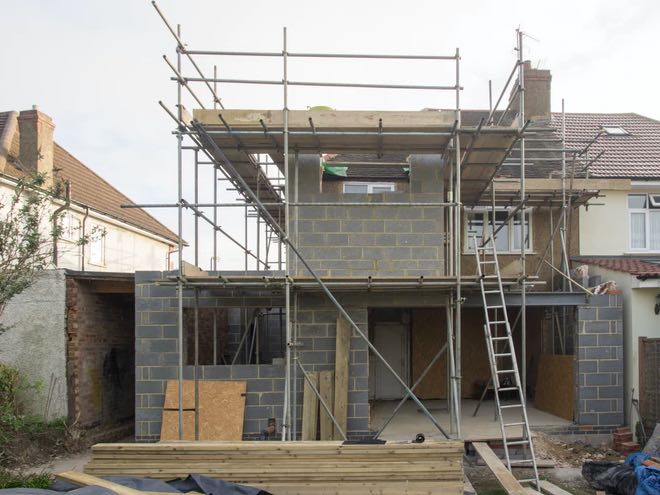
Having an architect on the team is recommended if the project is significant and involves moving walls, plumbing, or any electrical work, or if you are building an addition.
If you're thinking about working with a freelancer, this is also true.
Incorporating one-of-a-kind elements like a balcony, roof terrace, or fireplace into the design necessitates careful consideration of this factor.
You shouldn't take any chances with a subpar design when it comes to the stability of your home, so leave this kind of work to the architects.
Pay for a Stock House Design
Distributed to the public via print magazines, online catalogues, and websites, stock building plans are the product of collaborations between architects and interior designers.
The advantages include the ease of finding pre-made plans for houses in some wide range of looks, sizes, and costs.
If you're able to find a stock plan that works for you and your family, you can save spending money on hiring an architect.
An architect who drew up our stock building plan still hasn't met you, therefore they have no idea what your specific needs and preferences are.
Additionally, your building lot's specifics and local climate will not be accounted for in a prefabricated house layout.
When it comes time to make modifications to their newly purchased stock building designs, many clients realise they need the help of a professional architect.
Check this list of Melbourne builder services to help you make an informed decision for your treatment.
Employ the Services of a Mass-Production Builder
Production home builders typically place their newly constructed houses in suburban housing developments.
Contracts with architects and designers have been signed by production home builders in order to commission the design of floor plans that are appropriate for the location and are consistent with the floor plans of other development homes.
An integral part of working with a builder who specialises in mass housing is picking a floorplan from among options provided by the contractor (or developer).
Next, the client "customises" the project by choosing their preferred exterior siding, lighting, window styles, and other architectural features from a catalogue of options.
Constructors gain several advantages, including greater productivity and cost savings, when they use only a small subset of available building resources and stick to tried-and-true plans.
Since locals are crafting these initiatives, they are more likely to be well-suited to climatic and geographical conditions.
The downside is that your home will be built with fewer of the most fundamental options. You can ask for changes to be made to your house, but it still won't be deemed a custom build. It will probably look a lot like the rest of the houses in the neighbourhood. If you request changes that aren't on the contractor's approved list, he or she may refuse to do them or charge you a hefty sum of money. In planned communities like Celebration, Florida, for instance, there are limitations on the home styles, layouts, exterior paint colours, and landscaping that can be installed. This is important only if the available homes do not include your dream home.
Use the Services of a Qualified Professional Architect or Building Designer
To put it simply, home designers can charge less than architects because they don't have to have the same amount of education or to meet the same licencing conditions.
However, licenced interior designers are expected to continue their education and earn additional credentials that demonstrate their knowledge and competence in the field.
Advantages Unlike architects who work on commercial projects like hotels or schools, home designers specialise in designing private residences.
It's possible that a home designer will have more experience with building structures than certain licenced architects.
Obtaining a professional licence as an architect takes a long time and a lot of studies.
The needs of your family can be taken into account as the professional home design creates a one-of-a-kind home just for you.
It's no secret that architects and builders create cookie-cutter layouts for their client's houses.
In general, residential designers lack the expertise to create very complex or otherwise unusual plans.
If you want your home to meet very particular criteria or to be completely unique, you should hire an architect.
Thus, should we have called on an architect significantly more often? I think we've got things figured out as well as they can be right now.
While I do think it's best to hire an architect, you shouldn't ignore the value of your own input or that of your friends.
Finding someone to take your ideas, study and develop them, and then create professionally drawn drawings is a must when submitting an application requesting planning approval and going on to the level of building rules.
FAQs About Architect
Architect fees typically fall between 5% and 20% of the total project cost. For an average 2,700 square foot home with a build cost of $300,000, that comes from $15,000 to $60,000. Less commonly, they charge $125 to $250 per hour, and a few pros charge $2 to $10 per square foot.
Pros and Cons of Being a Licensed Architect
- Pro: Being an architect means you're now responsible for the health, safety and welfare of the general public, and that's nothing to scoff at.
- Con: That's a lot of responsibility.
- Pro: You'll make more money.
- Con: More money, more problems.
A negative architecture is what's "between the lines". You can look at all the code and describe a positive architecture for it, but given certain architecture or design rules, there's also the background; things we can be sure will never happen.
If what you're asking for is a bad solution, a good architect will take your request and propose an alternative that meets your design objective. A mediocre architect will say no, not explain why, frustrate you until you insist on doing it that way, and then give up.
As a rule of thumb, you can expect to pay your architect between 8 and 15% of the construction cost for their 'full services'; this breaks down as 35% up to planning, 35% up to tender, and 30% during construction, as the illustrated example below aims to demonstrate.
Conclusion
Do I need the services of an architect for this endeavour? Architects are certified professionals who have proven their knowledge through years of study and examination.
It allows them to provide better service to their customers by considering more options and coming up with novel approaches.
When designing a new building or updating an existing one, they should have an intuitive sense of what you'll need and an eye for symmetry and proportion.
Their services may be limited to drawing plans for some projects, but you can still hire them to modify a pre-existing blueprint if you find one that comes close to what you're looking for.
Alterations to an already-built layout typically have a smaller impact on the budget.
Before starting the design process, a qualified architect will meet with you and your loved ones to get a better sense of what you expect from the finished product.
Questions like "who will be living in the house," "how often do you host parties," "do you want some peace and quiet to work on your computer," "would a centrally located media centre be preferable," and "what exactly do you enjoy most about your current residence" will help the architect better understand your needs.
Being open to the architect's ideas and input is crucial for getting the most out of their services. The cost of employing an architect is comparable to the cost of employing any other type of expert service provider.
It is crucial to have all of your financial needs established before beginning the job in order to ensure budget parity.
Knowing the full extent and cost of the project, maintaining reasonable expectations, and learning from past mistakes are also crucial.
Finally, you want an architect who has the experience and a thorough knowledge of structural integrity to guarantee that your home will last.
Because of the time commitment involved in larger projects, it is crucial to hire an architect who is enthusiastic about the opportunity to work with you.
References and samples of previous work should be requested before hiring, as should an evaluation of the candidate's personal style.
It's important to investigate the situation and make sure everyone involved is up to your high standards, as there are times when the architect will need a team to get the job done.
Because of the inevitable mess, planning for the demolition of your home and the protection of your property should take place before construction even begins.
Here is a list of things to enquire about from any prospective architects.
Details like establishing open lines of communication and paying attention to the finer points when selecting an architect are highlighted throughout the text.
Establishing a regular schedule for updates and knowing when to contact one another prior to signing a contract is crucial.
It's also crucial to check the architect's financial acumen and make sure there's plenty of detail in the contracts. Having everything laid out in writing increases confidence and willingness to move forwards with plans; however, parties should not rush into anything before carefully analysing all relevant data.
In addition, architects are not covered by professional liability insurance, so hiring one could increase the cost of constructing a new home by as much as 8–15%.
Depending on the health of the local economy, an architect's hourly rate can range anywhere from $60 to $160.
Keep in mind that the amount of money an individual architect makes may differ from the amount that a company charges for its services.
You can save money on a new home by implementing some of the architect's mistakes, problems, and solutions. Spending (or earning) money on them will go down or disappear altogether.
Over time, the cost of operating a well-designed building will be less than that of a poorly planned one due to lower energy consumption.
Stock building plans are the product of collaborations between architects and interior designers and can be used to find pre-made plans for houses in a wide range of looks, sizes, and costs.
Many customers who buy stock building designs eventually realise they need an architect's help when it comes time to make changes to the plans.
Suburban housing developments are a common location for brand-new homes built by production home builders.
The developers sign contracts with architects and designers to have custom floor plans drawn up that are suitable for the area and conform to the style of the other houses in the development.
The term "customization" refers to the client's involvement in the design process by selecting from a variety of exterior siding, lighting, window, and other architectural feature options.
When builders employ a limited set of building resources and stick to tried-and-true plans, they reap benefits like increased productivity and reduced costs.
But there are restrictions on the types of homes allowed, as well as the exterior colours and landscaping that can be used.
Given that they don't need to go to the same lengths of schooling or pass the same rigorous licencing exams, home designers can charge less than architects.
When it comes to designing homes, home designers have more knowledge and experience than some licenced architects.
When designing a home, they can tailor it to the specific requirements of each family.
However, residential designers do not have the knowledge to create complex or unusual plans, so it is best to hire an architect for those projects.
Content Summary
- A professional architect will sit down with you and your loved ones to discuss your needs and wants before moving forwards with the design process.
- To get the most out of your architect's services, it's crucial to be receptive to their suggestions and input.
- There will be a delay in starting the project since the architects need time to get everything set up.
- You can have more realistic expectations for the project and for the working relationship with the architect if you learn about the architect's past experiences working with other clients.
- If you're interested in joining an architect's team, you should be ready to start working with others.
- Having a talk about the contractual treatment of changes prior to beginning work is highly recommended.
- Before signing a contract, make sure you and your architect will be able to keep lines of communication open.
- The success of a project is largely dependent on the level of communication between the many parties involved.
- While it's important to learn what an architect does, it's also worthwhile to consider how having one on your team could enhance the remodelling project you're leading.
- To that end, we developed a list of benefits you'll enjoy when you hire an architect to oversee the building of your home.
- In most cases, you won't need the services of just an architect if your project is little, like putting in new cabinets or constructing a closet.
- If you're able to find a stock plan that works for you and your family, you can save spending money on hiring an architect.
- Contracts with architects and designers have been signed by production home builders in order to commission the design of floor plans that are appropriate for the location and are consistent with the floor plans of other development homes.
- You can ask for changes to be made to your house, but it still won't be deemed a custom build.
- It's possible that a home designer will have more experience with building structures than certain licenced architects.
- Obtaining a professional licence as an architect takes a long time and a lot of studies.
- If you want your home to meet very particular criteria or to be completely unique, you should hire an architect.



