
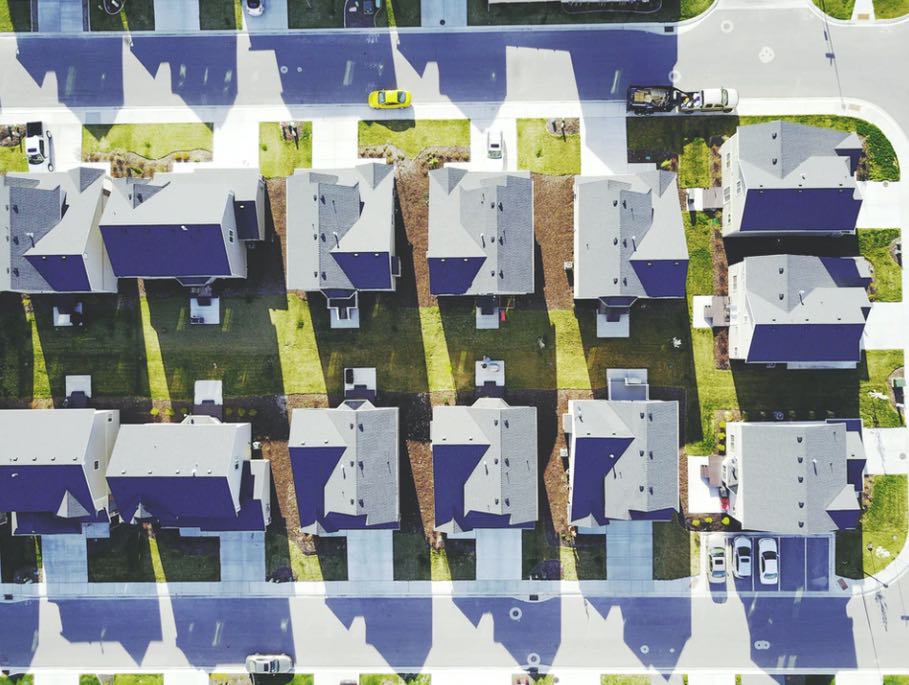
When it comes to housing, finding methods to save money will always be the name of the game, but this is especially true when you are about to embark on the most significant and satisfying financial expenditure of your whole life. Consequently, if you genuinely want to be able to flash a winner's smile, investing in a duplex is a tried-and-true method that may help you keep more of the money you've worked so hard to obtain. This is especially important if you want to be able to afford to do the things you want to do. When you first start out in the real estate business, you should have a viewpoint like this one, which takes in the big picture.
In the most usual form of dual occupancy, the first house is demolished and dismantled, and in its place, two new houses — which are often linked to one another — are built to accommodate occupants living in both of the dwellings. The term "dual occupancy" refers to the most popular kind of multifamily housing, which is known as "duplex" construction.
In Sydney, there has recently been an uptick in the number of inquiries about the building of duplexes. This may be linked to the fact that many hard-working families in Australia have come to the realisation that this is a smart strategy to financially secure their own futures as well as the futures of their children. This has led to an increase in the popularity of retirement savings plans.
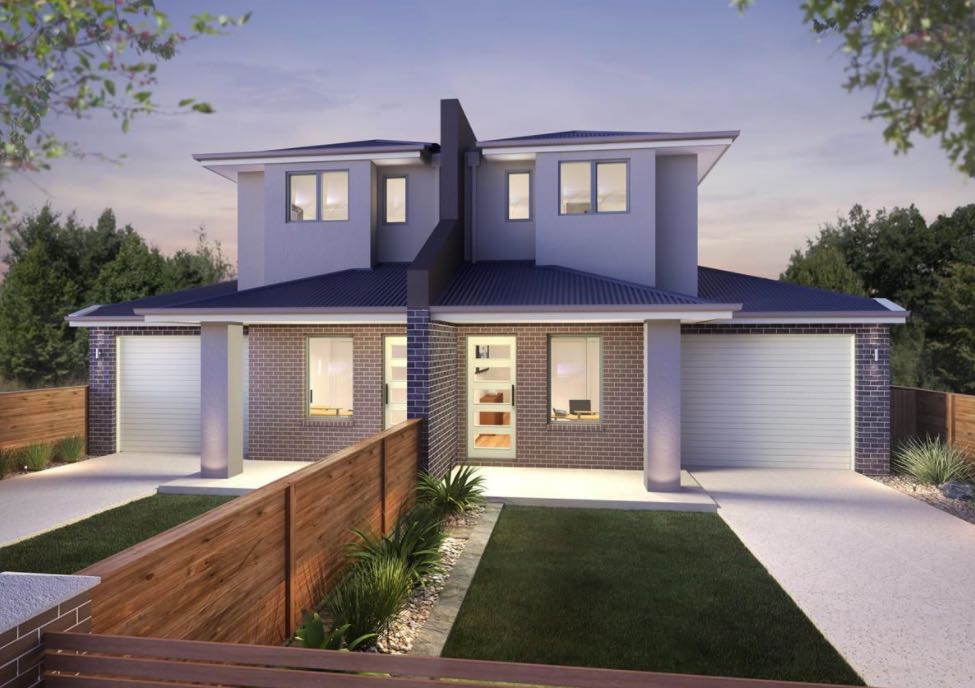
Any kind of dual occupancy has the potential to raise the value of a home, but building a duplex is by far and away the most advantageous solution. It is standard practise to build a duplex on two levels, with each of the two dwellings having its own front entrance that leads directly out into the street. In the future, one of the most important selling points for potential purchasers of the land will be the fact that both of the residences on the site face the street.
An untrained eye could believe that a duplex is a single-family dwelling if the front façade is designed and maintained in such a way that it gives the appearance that it is. Are you thinking of starting a new project? The solution to your problem is the MJS Construction Group builders in Melbourne.
Due to the fact that the majority of duplex homes are those with two floors, this enables you to create a substantially larger dwelling than you would be able to with other kinds of Dual Occupancy. This is because the majority of duplex homes have separate entrances.
The building cost of a two-story duplex with four bedrooms, two bathrooms, and a single garage would start at a minimum of $650,000. As soon as we are aware of all of the requirements imposed by the Council and the boundaries of the existing lot, we will be in a position to calculate the ultimate cost.
In it to win it
Who wouldn't want to have their investing cake and eat it too when they're just starting out in the real estate market? If it is managed properly, purchasing a duplex may be one of the least time-consuming and most financially rewarding ways to enter the real estate market. In accordance with the time-honored adage that "a problem shared is a problem halved," a duplex, which is defined as two residences established on the same title, enables you to make the most of your full living area by allowing you to adhere to the definition of a duplex. This means that a duplex makes the most of the proverb "a problem shared is a problem halved," which may be explained more simply as follows: When seen from this perspective, a duplex eliminates the problems that are typically connected with the process of land subdivision. Instead, it processes two combined residences under the same roof, with each property enjoying its own luxury and independent living quarters that are completely furnished with all of the assets and necessities that are necessary for everyday life.
As a direct result of this, they have arrived to the conclusion that investing in a duplex is the best course of action to take given the substantial amount of money it will save them in the short term. These cost reductions include reduced amounts for stamp duty, holding fees, insurance premiums, and council rates, in addition to cheaper building charges.
In addition, owners of duplexes enjoy the benefit of not being required to pay the often burdensome strata fees, provided, of course, that they do not re-title their properties as condominiums. This benefit is only available to owners of duplexes who do not convert their properties into condominiums. In the event that you choose to go with that other option, you will, of course, be in a position to save money on the continuing maintenance costs that are often connected with freehold homes. If you go with that other option, however, you will not be able to do so.
Long-term vision
In addition to all of these immediate benefits, owners of duplexes also benefit from enhanced tax depreciation on their investment, which is a substantial financial advantage. This is an advantage that may help them save a large amount of money. Therefore, you are not only maximising the use of the actual area of the block size on which you are constructing or remodelling, but you are also maximising the gain that may be obtained from the money that you are expending. In a word, a duplex may capitalise on the future possibilities offered by your property in a way that a regular land subdivision cannot. This is because a duplex is comprised of two separate dwelling units. In addition to this, it strategically provides a sizeable enhancement to the return on investment that you obtain as a result of your expenditures.
As a consequence of this, the ownership of a duplex is coming to be considered as an increasingly lucrative option for financial gain. When you buy a duplex, you are effectively responsible for the upkeep of two individual homes that are located on the same plot of ground. This opens up the possibility of generating two distinct incomes from the same piece of ever-increasingly costly real estate. Both incomes may come from renting out a portion of the property. Because of this, one of the most major financial advantages of having a duplex is that you can also personally settle into one house yourself while placing the other dwelling on the rental market. This gives you the ability to generate two incomes from the same piece of real estate. Because of this, you are able to maximise the potential of both properties.
Naturally, this will result in a steady flow of income while halving both the maintenance costs and the degree of expectation that is placed on the tenants. Because of this, the administration of your rental property will be much less stressful as a consequence, given that it is located right adjacent to your house. As a result of this.
Because you will only require one general policy to cover both of the homes, the total amount of premiums that you pay on a monthly basis will drop by a sizeable amount. When it comes to insurance, here is where the money you save comes into play. It will also have the additional benefit of lowering any anxiety that you may have on a continual basis as a result of the financial strain that is generated by the payments of your mortgage. Additionally, there is the advantage of an increase in tax deductions, which is made possible owing to the fact that some items are shared between your personal residence and the section of the property that is used for renting out space.
All Gain, No Pain
As a consequence, this leads to a reduction in expenditures paid out while at the same time leading to an increase in the amount of money received (due to the fact that you will only have to pay the one council rates invoice).
If, on the other hand, you choose to rent out both apartments in your duplex, as many astute owners of duplexes do, then the amount of cash you get from your single property will be raised by a factor of two. This is a common practise among owners of duplexes. Then, when the time comes for you to decide to sell your duplex and consolidate your aim towards a higher place in the housing game, you will be placing two distinct homes on the market for potential buyers to choose from. This will allow you to maximise the amount of money you make from the sale of your duplex. Buyers who are seeking for housing alternatives that are easier on their budgets may find these two possibilities more appealing than a single option for entire freehold ownership. This is because it is probable that these two options will be more cheap overall than the single option.
Because of this, parcels of property that include a duplex construction often end up having a comparatively higher resale value than those that do not have such a structure. This is due to the fact that both apartments come pre-fitted with all of the necessary furnishings and amenities, such as a kitchen and a bathroom of their very own.
There are a number of persuasive arguments in favour of retaining the configuration of your property as it is and building a second residence on it rather than subdividing it. You may want to use it as a studio or office space, you may regularly have guests from out of town, or you may want to use it as a house for an adult kid or parent. All of these are potential reasons why you may want to utilise it. You might potentially be interested in generating income through rentals of your property. The individual ordinances of each municipality control who can use second homes and guest houses, how many people can use them at one time, and a variety of other characteristics of second homes and guest houses. The most important aspect of building a second house on your land is meticulous planning. This is due to the fact that you will have a hard time selling any development on your lot that was not built in accordance with local building codes. You ought to get the process of planning started as quickly as you possibly can. You can also have to pay a fine or be made to tear down the structure if you're found guilty of this offence.
- Take into consideration the things that you need. It is possible for guesthouses and certain in-law suites to have only two bedrooms and a bathroom, however rental suites and other in-law suites must be equipped with a fully furnished kitchen area. Guesthouses may also only have one bathroom. Determine if it can be attached or whether it must be removed in order to move forwards with the process.
- Check the municipal website or go to the offices of the zoning department of your local municipality to learn whether or not the municipality allows a second building to be erected on the property. If the answer is yes, then you may proceed with the construction of the second structure. There are several towns that either do not allow this kind of construction at all or require a variance in order to build one. You are needed to attend a meeting of a local zoning board in order to submit a request for a variance, which is a request to make an exception to the regulations that are already in place. A variance is a request to create an exemption from the rules that are now in place.
- Check to see whether the zoning allows for a full kitchen and discover if the home must be connected or detached. Also, check to see if a garage is required for the home.
- By referring to the lot plat map, which depicts the shape and measurements of your lot, you will be able to ascertain the dimensions of your property. You may get a copy of this map by submitting a request for it to the local tax office or to the department in your community that is in charge of issuing building permits. Find out from the local zoning authorities what the minimum lot size is that can sustain one house in your neighbourhood and how much room is required for two houses by inquiring into each of these matters. In some areas, you are obliged to have a lot size that is twice as large as the absolute minimum, and you need one of these lots for each home you build.
- Check to determine if there is enough space on the land, taking into mind where the first home is situated, and report your findings. It is likely that you will not be able to create a lot area that is large enough to fulfil the criteria if the current home is situated in the exact centre of the lot. This scenario is feasible if you do not move the existing home.
- Examine the minimum and maximum square footages that are permitted for the project to determine whether or not they will satisfy your needs. The size of a family's primary residence often serves as the benchmark for determining the maximum allowable square footage for a second home in many communities.
- Determine the distance that the setbacks are from both the back and the sides of the property in your neighbourhood. If you want to construct a second residence on the land, you will need to ensure that you maintain the appropriate distances between the existing home and the lot line.
- Have the utilities that service your property gone through any kind of testing to see whether or not they will be able to meet the increased demand that will be placed on them? You could be able to add extra capacity, but some municipalities restrict you to use the same lines and systems for both households, which means you won't be able to expand if that's the case. If that's the case, however, you might be able to add further capacity.
- Make sure that parking and drainage are taken into consideration while constructing the project and deciding where it will be located. In order to enable the installation of paved surfaces, as well as the levelling out and providing of the slight raise necessary for the new home, it is estimated that the whole lot will need to be regraded in order to suit these requirements. The conclusion that you get after reading this article will be beneficial to the construction of your home. At MJS Construction Group, we have a strong dedication to our work.
- If you reside in a subdivision, you should look into whether or not the restricted covenants that apply to your neighbourhood apply to your property as well.
- In the event that you did not receive a copy during the process of closing, you should be able to obtain one from your home owner's association, the office of the builder, or the organisation that is in charge of managing local building permits. In the event that you did not receive a copy during the closing process, you can find more information here. The majority of covenants include some stipulations that must be adhered to regarding the additions that can be made to a property as well as the architectural style of any new structures that are erected in the neighbourhood. These stipulations are intended to maintain the aesthetic quality of the neighbourhood.
- Pick a look that will complement the structure of the building in which you now reside in the best way. Even if you aren't concerned about the potential selling value of your home or its kerb appeal, it is still a good idea to get this work done because most communities require it.
Get Approved Before You Build!
This may be accomplished in a variety of unique methods, all of which are determined by the region in which you are located. In spite of this, the most of the steps are going to continue being the same.
Visit the office of the town you will be in so that you can collect all of the required information before you even begin to prepare. This should be done before you start making any preparations.
You need to also be able to assess, from this vantage point, whether or not it is even allowed to develop a large number of dwellings in the neighbourhood where you live. If this is the case, you need to make sure that you get all of the required paperwork in addition to the rules and the legislation. After you have completed these steps, you will be in a far better position to plan for the building of the project.
The particular zoning restrictions are going to be the most important piece of information for you to find out, so make sure you do that.
This will function as the full handbook for you to follow once the time comes for you to develop something. However, it is also capable of a lot deal more than that! Because of the zoning limitations that have been imposed, you will have a good idea of what kinds of typical problems to anticipate as a result.
One of the most efficient methods to advance one's knowledge is through picking up new information from others who have come before them.
Your Property, But Not (Always) Your Rules
One of the most widespread errors in thinking is that once a person owns a piece of property, they are free to do anything they want with it. This is not the case.
However, purchasing a sizeable piece of property does not automatically provide you permission to build whatever you choose on that land. There is a large amount of going through the motions and making sure everything is in order.
This becomes especially obvious when it comes to the construction of a large number of dwellings on a single piece of property.
Despite this, there is no basis for supposing that you won't be able to build more than one house at a time. After paying a visit to the clerk's office in your municipality, you will have a better idea of the things that are available to you and how you may use them. If the municipality in which you live does not allow you to build many homes, what other choices do you have available to you?
When it comes to building, you will, however, be expected to go by the regulations that have been established for the site.
Why Wouldn’t You Be Able To Build Additional Houses On Your Lot?
It is not always simple to fathom why the restrictions would ban you from erecting a structure on your own land. This is especially true when it comes to older regulations. However, there are a multitude of reasons why certain locations have such rigors laws. These reasons vary from place to place.
My investigation has lead me to conclude that the fundamental reason for this is that the municipality is concerned with sustaining a specific public persona. This is what I believe to be the case because of the findings of my study.
If the town is in a position to exercise greater influence over the look of the town as a whole, it must be able to govern who builds what and how it is built. The vast majority of towns do not want their territory to be recognised as a "dumping site," and they actively work to prevent this reputation. We've all been to those smaller towns that have yards that look like junkyards, with old, broken-down autos and furniture scattered all over the lawn. These communities have yards that look like junkyards.
Some individuals are of the opinion that this is only one of the many strategies that the regional administration may employ in order to consolidate its power over the general population. However, the motivation for them doing this is not just rooted in the fear that their neighbourhood would become an eyesore in the near future. The local government has serious worries about public safety whenever a single parcel of land is developed to house many residential structures.
Because of this, it is of the highest significance to closely adhere to the construction codes that are in effect within one's neighbourhood.
Lot Size Regulations To Be Aware Of
In spite of the fact that certain towns do not expressly forbid the development of a large number of properties, such municipalities have still implemented legislation that restrict the development of such a large number of properties.
One example of a regulation that is capable of successfully achieving this objective is the regulation of plot sizes.
In certain neighbourhoods, the maximum allowable square footage of the lot that may be acquired is set at a specific amount. This means that you are allowed to construct a large number of houses; but, they will need to be able to fit on a lot that is of a lower size.
The fact that this makes it more difficult to develop a large number of ordinary households on a single lot is excellent news for people who are interested in compact houses. Only 150 square feet of living space is common for the floor layout of a little house. Even if the greatest lot size that is permitted in your town is a half acre, you will still have more than enough area to construct numerous micro houses in that space.
In spite of this, it is still your responsibility to make sure that you comply to the necessary building criteria that have been set by the government in your region. Because you are effectively taking advantage of a loophole, you are going to need to confirm that everything else is in the appropriate location.
Regulations For Distance Between Each House On The Lot
A strange mechanism is utilised by the government to impose limits on its inhabitants without those persons being aware of the restrictions. One strategy for accomplishing this objective is to place confinements on the amount of free space that may be left between each individual dwelling unit.
For instance, the zoning regulations of certain places dictate that there must be a minimum of 2 acres of space between each pair of residences. This distance must be maintained between each pair of homes.
This guarantees that there will be a considerable amount of breathing room between your property and the one that is adjacent to it.
To what degree, on the other hand, does this restrict your capacity to build several residences on a single plot of land? This suggests that you will not be granted permission to build many homes if they are situated within a distance of two acres of one another. On the other hand, this does not rule out the idea of building more than one dwelling on the same plot of land. You would need to purchase a lot that is adequately large if you planned to construct two residences, one on each side of the lot.
This is another example of the government's attempt to establish authority while also maintaining a significant number of loopholes in existing laws and regulations. Check out the many builder services Melbourne that we provide on our website so that you can make an educated option regarding your treatment.
Why should you still have rules to follow if you are permitted to build how you want?
It does not matter how many houses you want to build; in any case, you will undoubtedly be required to comply with a variety of zoning restrictions. This has less to do with the ability of the government to impose control and more to do with the necessity of protecting the public's health and safety.
The construction of many homes on a single lot requires adhering to a number of general criteria, all of which must be kept in mind throughout the design stage. A few of the more significant ones are as follows:
Water and Power Issues
The very first thing that you are going to be tasked with doing is figuring out where the water and electricity sources are going to come from for each individual dwelling. There will be a few different towns that you may visit in order to replenish your supplies of water and electricity. In the vast majority of instances, a single electrical supplier will be contracted to supply a community with electricity. This is because the power supplier plans to offer the municipality a variety of deals and bribes in exchange for continuing to do business with them.
On the other hand, this also suggests that the options available to you for the source of the power that you utilise are more restricted as a consequence of the fact that this is the case.
After you have selected a power provider to work with, the next step is to make arrangements for a representative from that firm to visit your property and conduct an inspection. Before commencing construction on any of the dwellings that you want to build on the lot, you are required to make certain preparations. These preparations include ensuring that power can be provided to the region, which is just one example.
In this predicament, you should avoid doing anything that may cause the system to become overwhelmed. This also means that you should prepare yourself to invest more money in order to adequately set up your lot so that it can supply the required level of power.
Being able to provide your home with water is a very other ballgame than simply having access to water. Establishing a water collecting system is one of the most typical kinds of preparations that individuals do when they have plans to build a number of residences in close proximity to one another. But were you aware that it is against the law in a number of states to collect water for personal use from public or private sources such as lakes or rain?
This is done to make certain that the general populace is not put in any kind of peril.
What other options do you have at your disposal in the event that you are unable to collect the amount of water that you require? It's likely that, much as with the electric company, you don't have any options when it comes to the water in your neighbourhood; this is similar to how things are with the electric company. It is a good idea to work together with the municipality in order to guarantee that the distribution of water to each property goes off without a hitch when the time comes to make the necessary arrangements.
Work With Your Town – Not Against It!
I will freely admit that being subject to the limits of the government is frustrating. Especially when all you are trying to do is have your way with your own stuff and use it whatever you wish.
On the other hand, there are some circumstances in which it is desirable to move with the flow rather than to fight against the tide.
It's likely that the people who live in your neighbourhood are far more open-minded about the prospect of owning several homes than you give them credit for being. Working together with the municipal government is the best approach to proceed.
This is especially crucial when taking into consideration the fact that you will be submitting all of the required paperwork and permissions to the office located in your town. They will not only be able to direct you in matters pertaining to power and water, but they will also be able to assist you in ensuring that your properties are both secure and in compliance with the law. They will be able to do this by assisting you in ensuring that your properties are both secure and in compliance with the law.
There is no guarantee that the process of getting a variance will be successful in any given situation. During the conversation that is taking place over the request, the participants on both sides hear the viewpoints of their respective neighbours. Due to the fact that the decision of the zoning board—which is also often referred to as the zoning board of appeals—can be arbitrary at times, it is difficult to reverse the vote of the zoning board in court. To enhance the likelihood of your proposal being approved at the meeting, you should have a conversation about the issue with a local zoning specialist or a lawyer before attending the meeting.
It's not a very unique idea to build many homes on a same parcel of land, but it is becoming increasingly popular.
In days gone by, it was common practise for families to acquire a single enormous property that would meet all of their requirements for dwelling. When the children grew up and had their own families, the adults in the family would help them build a new house on the property that their parents already owned. This is the reason why you may frequently come across older, more conventional dwellings that give the look of a "colony."
As time went on and the nation got older, the government began to put even more limits on the people living there. And even while there may be moments when it will seem restrictive, there will also be instances when it will work to your benefit.
Content Summary
- When it comes to housing, finding methods to save money will always be the name of the game, but this is especially true when you are about to embark on the most significant and satisfying financial expenditure of your whole life.
- Consequently, if you genuinely want to be able to flash a winner's smile, investing in a duplex is a tried-and-true method that may help you keep more of the money you've worked so hard to obtain.
- This is especially important if you want to be able to afford to do the things you want to do.
- The term "dual occupancy" refers to the most popular kind of multifamily housing, which is known as "duplex" construction.
- In Sydney, there has recently been an uptick in the number of inquiries about the building of duplexes.
- This has led to an increase in the popularity of retirement savings plans.
- Any kind of dual occupancy has the potential to raise the value of a home, but building a duplex is by far and away the most advantageous solution.
- It is standard practise to build a duplex on two levels, with each of the two dwellings having its own front entrance that leads directly out into the street.
- Are you thinking of starting a new project?
- The solution to your problem is the MJS Construction Group builders in Melbourne.
- Due to the fact that the majority of duplex homes are those with two floors, this enables you to create a substantially larger dwelling than you would be able to with other kinds of Dual Occupancy.
- The building cost of a two-story duplex with four bedrooms, two bathrooms, and a single garage would start at a minimum of $650,000.
- As soon as we are aware of all of the requirements imposed by the Council and the boundaries of the existing lot, we will be in a position to calculate the ultimate cost.
- In it to win itWho wouldn't want to have their investing cake and eat it too when they're just starting out in the real estate market?
- If it is managed properly, purchasing a duplex may be one of the least time-consuming and most financially rewarding ways to enter the real estate market.
- In accordance with the time-honored adage that "a problem shared is a problem halved," a duplex, which is defined as two residences established on the same title, enables you to make the most of your full living area by allowing you to adhere to the definition of a duplex.
- This means that a duplex makes the most of the proverb "a problem shared is a problem halved," which may be explained more simply as follows: When seen from this perspective, a duplex eliminates the problems that are typically connected with the process of land subdivision.
- As a direct result of this, they have arrived to the conclusion that investing in a duplex is the best course of action to take given the substantial amount of money it will save them in the short term.
- These cost reductions include reduced amounts for stamp duty, holding fees, insurance premiums, and council rates, in addition to cheaper building charges.
- In addition, owners of duplexes enjoy the benefit of not being required to pay the often burdensome strata fees, provided, of course, that they do not re-title their properties as condominiums.
- This benefit is only available to owners of duplexes who do not convert their properties into condominiums.
- Long-term visionIn addition to all of these immediate benefits, owners of duplexes also benefit from enhanced tax depreciation on their investment, which is a substantial financial advantage.
- This is because a duplex is comprised of two separate dwelling units.
- In addition to this, it strategically provides a sizeable enhancement to the return on investment that you obtain as a result of your expenditures.
- As a consequence of this, the ownership of a duplex is coming to be considered as an increasingly lucrative option for financial gain.
- When you buy a duplex, you are effectively responsible for the upkeep of two individual homes that are located on the same plot of ground.
- Because of this, one of the most major financial advantages of having a duplex is that you can also personally settle into one house yourself while placing the other dwelling on the rental market.
- This gives you the ability to generate two incomes from the same piece of real estate.
- Because of this, you are able to maximise the potential of both properties.
- Because of this, the administration of your rental property will be much less stressful as a consequence, given that it is located right adjacent to your house.
- As a result of this.
- Because you will only require one general policy to cover both of the homes, the total amount of premiums that you pay on a monthly basis will drop by a sizeable amount.
- When it comes to insurance, here is where the money you save comes into play.
- Additionally, there is the advantage of an increase in tax deductions, which is made possible owing to the fact that some items are shared between your personal residence and the section of the property that is used for renting out space.
- All Gain, No PainAs a consequence, this leads to a reduction in expenditures paid out while at the same time leading to an increase in the amount of money received (due to the fact that you will only have to pay the one council rates invoice).If, on the other hand, you choose to rent out both apartments in your duplex, as many astute owners of duplexes do, then the amount of cash you get from your single property will be raised by a factor of two.
- Then, when the time comes for you to decide to sell your duplex and consolidate your aim towards a higher place in the housing game, you will be placing two distinct homes on the market for potential buyers to choose from.
- This will allow you to maximise the amount of money you make from the sale of your duplex.
- Because of this, parcels of property that include a duplex construction often end up having a comparatively higher resale value than those that do not have such a structure.
- There are a number of persuasive arguments in favour of retaining the configuration of your property as it is and building a second residence on it rather than subdividing it.
- All of these are potential reasons why you may want to utilise it.
- You might potentially be interested in generating income through rentals of your property.
- The most important aspect of building a second house on your land is meticulous planning.
- This is due to the fact that you will have a hard time selling any development on your lot that was not built in accordance with local building codes.
- You ought to get the process of planning started as quickly as you possibly can.
- Take into consideration the things that you need.
- Check the municipal website or go to the offices of the zoning department of your local municipality to learn whether or not the municipality allows a second building to be erected on the property.
- If the answer is yes, then you may proceed with the construction of the second structure.
- Check to see whether the zoning allows for a full kitchen and discover if the home must be connected or detached.
- Also, check to see if a garage is required for the home.
- By referring to the lot plat map, which depicts the shape and measurements of your lot, you will be able to ascertain the dimensions of your property.
- Check to determine if there is enough space on the land, taking into mind where the first home is situated, and report your findings.
- It is likely that you will not be able to create a lot area that is large enough to fulfil the criteria if the current home is situated in the exact centre of the lot
FAQs About Building Homes
Yes, you can build your own home in Australia if you want to cut cost and save money. You'll have to do an owner builder course if you're working on a project which costs over $12,000. Owner builder duties include: Supervise other contractors working under you.
All costs include stamp duty. The cost of building includes land purchase, and assumes a first home owner concession on stamp duty where applicable. According to our figures, Perth is the only major Australian city where buying could be cheaper than building.
A home with a simple and concise layout is the cheapest type of house to build. Ranch homes are typically single-story structures with attached garages. They're easy to find construction plans for and highly customizable, so you can find a home that fits your needs and budget.
Currently, on average, it's 20 percent cheaper to buy than to build. Building your dream house adds sentimental value and advantages in the long run. When you build a home you can have everything your way, from the carpets to the cabinets and everything in between, both structurally and design-wise.
New-home buyers could be given a $50,000 handout under a proposal by the Property Council of Australia. It says the move would “kickstart construction for new housing, generate jobs and boost consumer confidence”.



